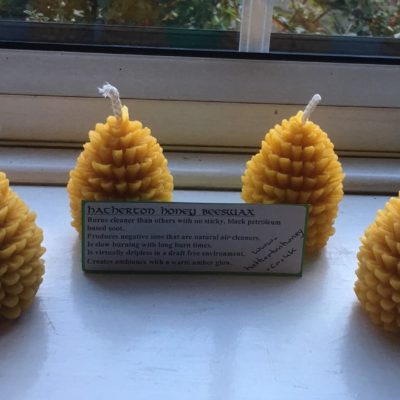
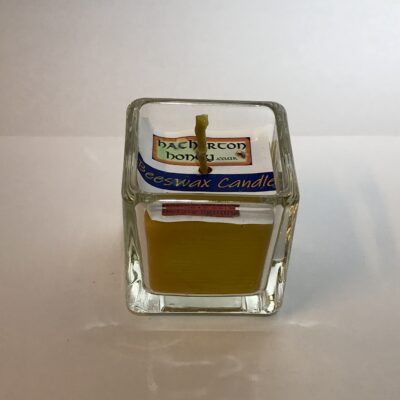
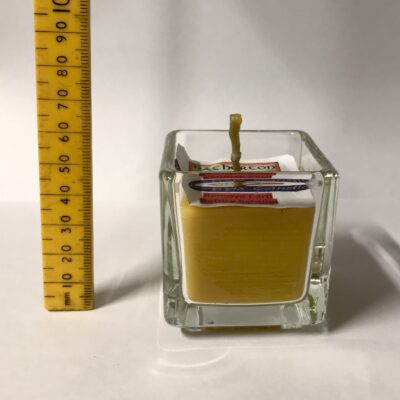
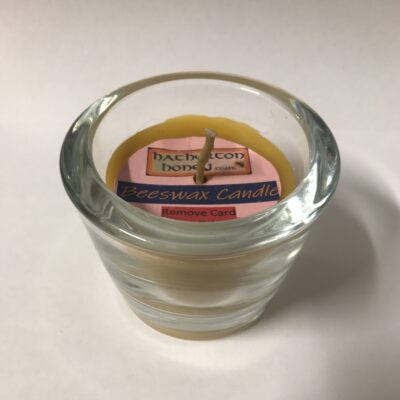
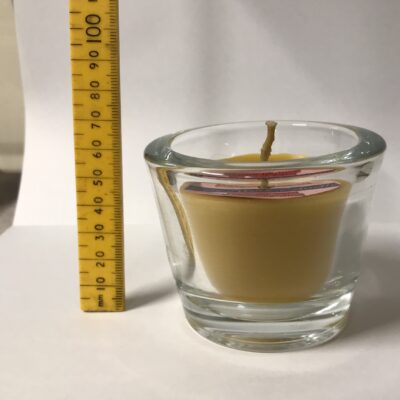
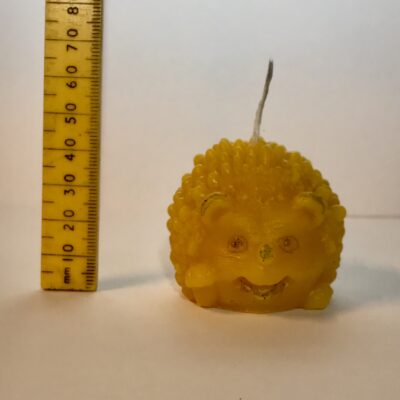
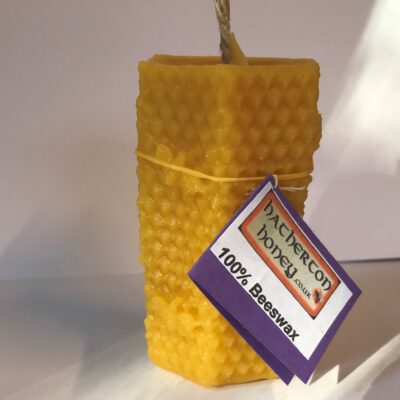
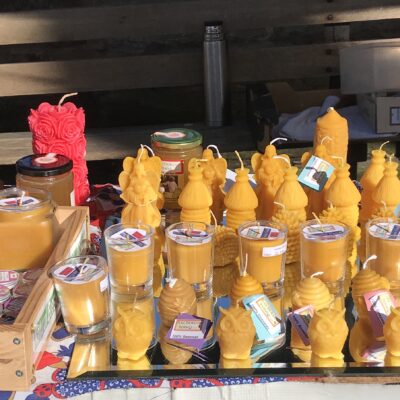
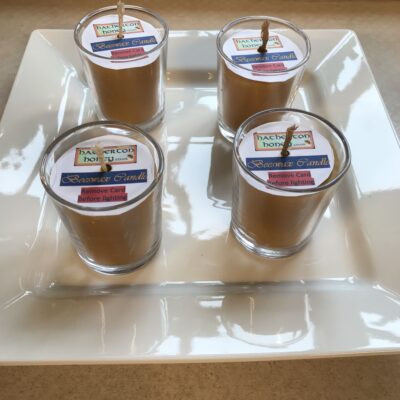
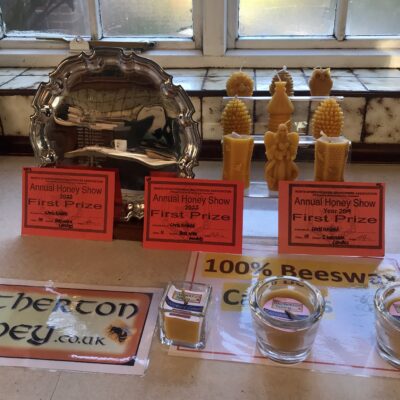
Beeswax Candles are for using- not mantelpiece ornaments- even though they look good on most mantelpieces!!
These lovely candles do burn more brilliantly, cleaner and longer! So, stop burning petroleum and polluting your home. Turn to beeswax. It will make a difference in your home ambience and the quality of life of those who love candles.
Wind down, light some therapeutic beeswax candles, curl up in the sofa with a cup of hot tea and let the stress of the day melt away.
Beeswax is used to construct the combs in which the bees raise their young and store pollen and honey. It is a natural wax that comprises mainly esters of fatty acids and various long chain alcohols.
But how is beeswax made? What is it made of?
Female worker bees, whose lifespan is about four weeks, possess eight special wax-producing glands on their abdomens. The young worker bees are most efficient at wax production. Their wax glands start to degenerate after plus-minus 18 days until the end of its life.
Beeswax is made by these bees through the consumption of honey produced from the collected flower nectar. To produce one pound of wax, six to eight pounds of honey are ingested (Source: Beeswax Production, Harvesting, Processing and Products,
The sugar converted by the bee’s wax glands is then secreted through tiny pores in the bee’s body as wax droplets, which harden into wax when exposed to air. The wax looks like small, transparent scales on the bees’ abdomen. After being chewed and processed by the bees’ salivary secretions, the wax scales turn into white colour and become soft and pliable enough to be used as a construction material for the bees’ comb. As high temperature would soften the beeswax too much and low temperature would render the beeswax too hard, the honeybees have to use their body heat to regulate the ambient temperature of the hive and maintain it such that it is most ideal temperature for managing the beeswax – 35 degrees C
At first, the honeycomb which comprises hexagon shaped cylinders is glass clear and colourless but its colour gradually changes with the incorporation of honey, pollen and propolis and darkens with age and use for raising brood. Depending largely on the type of honey and pollen, the colour of beeswax varies from white, through different tones of yellow, orange, red to brownish black. Beeswax colour may have aesthetic significance but does not have any quality implications.
Benefits of Beeswax over Paraffin Candles
Beeswax Candles
1 Rare and expensive. Beeswax costs about 10 times more than paraffin wax. It is estimated that the bees must fly 150,000 miles to collect enough nectar to produce six pounds of honey just to secrete one pound of wax. And for every 100 pounds of honey harvested, the beekeeper can only obtain about 1-2 pounds of the beeswax.
2. Created by the bees, 100% natural, all chemical-free. Oldest candle known to man and prized since ancient times. (Note: There are no regulations on disclosing candle ingredients. Candles labelled as “beeswax” may be predominantly made of paraffin and contain as little as 5% beeswax. Look for “100% pure beeswax candles”.
3. Environmentally friendly and safe, non-toxic. Burn very clean with little smoke when trimmed properly as they are not oil-based. 100% beeswax candles are natural, undergoes no chemical processing and biodegradable.
4. Smell great as they are naturally scented by the honey and floral nectar in the honeycomb; carbon-neutral.
5. Have a high melting point (in fact the highest among all known waxes) which results in a significantly longer (2-5 times) burn time and drip very little, if any at all. This offsets their higher cost.
6. Burn stronger and brighter. Emit naturally bright light of the same light spectrum as the sun Green Rhino Spectrum, Solar Spectrum). They are a gift from nature!
7. Burn with even more beauty with age. Over time, beeswax develops a white film (especially in cooler climate), which is deemed as a very desirable feature.
8. The only candle that emits negative ions to purify, cleanse, improve air quality, and invigorate the body. A natural ionizer!
9. Hypo-allergenic, benefit those with environmental allergies, sensitivities, and asthma.
10. Originate from a renewable fuel – beeswax.
Paraffin Candles
Easily available and cheap. Paraffin candles make up 95% of the world’s candle production. A pack of 100 paraffin tea light candles from IKEA costs less than a fiver.
An oil-based, highly refined petroleum by-product that contains up to 11 toxic compounds and chemicals such as benzene and toluene. Emit toxic diesel exhaust-like fumes.
A black sludge that is treated with 100% industrial strength bleach to change its colour to white, creating toxic dioxins. Acrolyn, a carcinogenic chemical is then added to solidify the white sludge. The end result is an extremely toxic product. By burning these candles, you produce the same toxins. If you really know how poisonous paraffin candles are, you would dump them and stop polluting the air in your home.
Contain artificial dyes and synthetic fragrances which also produce toxins and stains when burned, adding to the environmental damage. Some paraffin candles contain lead wicks.
Not as efficient. Short burning and drip excessively, which means that they may not be that economical after all. Additional chemicals can be added to reduce dripping.
Produce a flame that is not as strong and brilliant. Cannot evoke the same natural ambience of warmth and style as beeswax.
Synthetic waxes do not bloom as time passes.
Produce harmful black soot that leaves streaks of black residue and stains home interior surfaces.
Are to be avoided by those with allergies or asthma conditions.
Originate from a non-renewable resource – petroleum.